Art in Bloom
Holly Keris, J. Wayne & Delores Barr Weaver Chief Curator
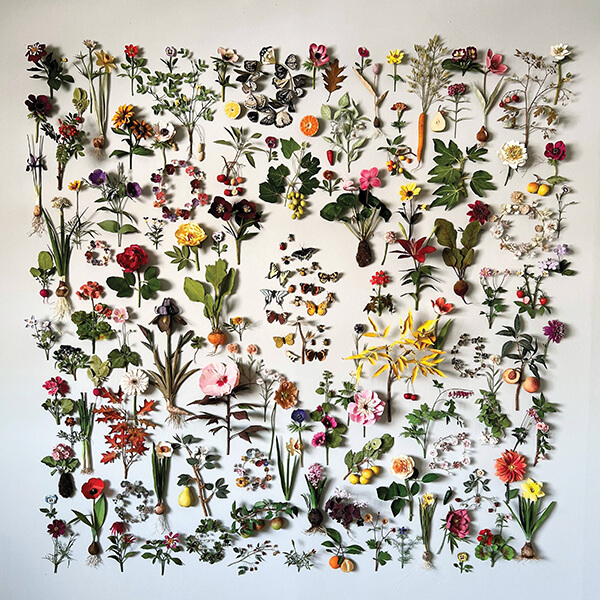
Drawing upon the Cummer Museum’s broad permanent collection, “Art in Bloom” creates a through line from the 18th century through today by showcasing historic floral still life paintings alongside works by contemporary artists who explore nature’s bounty through a variety of media.
It may seem hard to imagine, but paintings of artfully arranged cut flowers did not emerge as a trend until the 16th century. Prior to that time, these scenes were relegated to the background of other compositions. Still lifes peaked first in Northern Europe during the 17th century, where the compositions often carried complex meaning. Whether the artist sought to convey a message through the choice of specific flowers, which were widely associated with individual attributes, demonstrate access to a broad global trade network, or speak to the transience of life, contemporary audiences would have recognized a deeper meaning than might be initially apparent today.
The earliest painting in “Art in Bloom” dates to 1793. Cornelis van Spaendonck (Dutch, 1756 – 1840) paints a lush assortment of flowers including a tulip, rose, peony, and hyacinth with dramatic lighting. Next to one of the two vases is a crystal bowl edged in gold containing grapes and a pomegranate, Christian symbols of life and the Resurrection. A decorative plinth features a classical-style relief carving of a woman and child next to a Greek wine jug. To further illustrate the fleeting nature of life, van Spaendonck also includes scattered dew drops and a wilted flower.
Severin Roesen (German American, c. 1815 – 1872) transformed the genre in this country when he emigrated in 1848. Inspired by earlier Dutch compositions, Roesen’s bountiful combinations of fruits, flowers, and objects such as the glass bowl and bird’s nest speak to the perceived abundance of America’s natural resources and offer a contrast to the more austere works common at the time. Although little definitive is known about his early life, it is likely that Roesen trained as a porcelain painter in Germany, as evidenced by his incredible attention to detail.
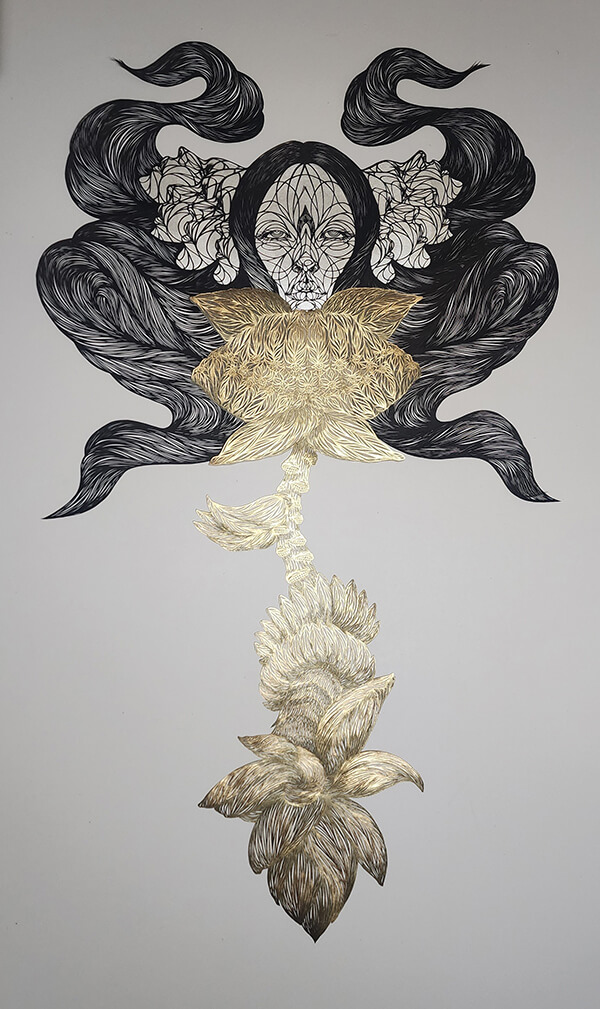
Rather than relying on traditional materials like paint and ink, the contemporary artists featured in the exhibition interpret the natural world through glass, wood, metal, and even LEGO bricks. Their works offer fresh perspectives on the enduring legacy of still-life traditions, reimagining themes that have captivated artists for generations.