By Vanessa K. Harper Photos by Craig O’Neal
Land as Old as Time
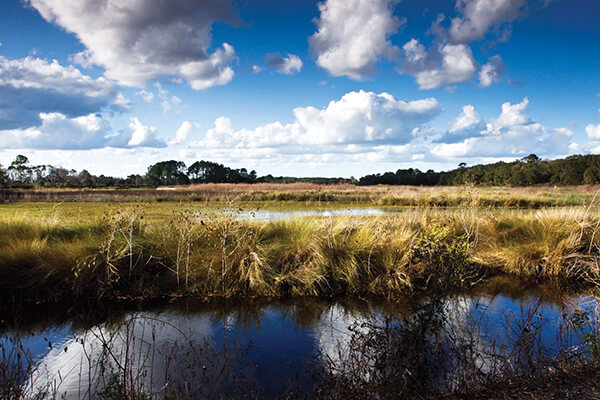
At sunrise, Guana feels suspended in time. Light lifts slowly across the estuary, catching the edges of sawgrass and open water. A great blue heron moves through the shallows before lifting suddenly into the morning sky. Moments like this can feel timeless. But they are not.
Places like Guana do not exist by accident. They exist because, over generations, people decided they should. Today, that decision can no longer remain passive. The Guana River estuary, one of Northeast Florida’s most important coastal ecosystems, is now part of an active, unfolding question: What is this land for?
A Frontier of Water and Marsh
When Spanish settlers arrived in Northeast Florida in the sixteenth century and founded St. Augustine in 1565, they entered a landscape long inhabited. The surrounding estuaries became part of a “coastal frontier,” supporting the colony through fishing, ranching, and small agricultural outposts, often at the expense of native communities. Rivers like the Tolomato and Matanzas served as transportation corridors along the coast.
Yet the marsh resisted transformation. Too wet, too dynamic, too unpredictable for permanent settlement, it remained a place people depended on but rarely controlled.
That uneasy balance between human use and ecological resilience has persisted for centuries.