By Erika Zambello Communications director for Audubon Florida
As communications director for Audubon FloridaSummer is a great time to be on the Florida coast. Sea, sun, and … birds! Summer is nesting season for beach-nesting sea and shorebirds. They lay their eggs right on the sand, and we need to work together to protect these special families.
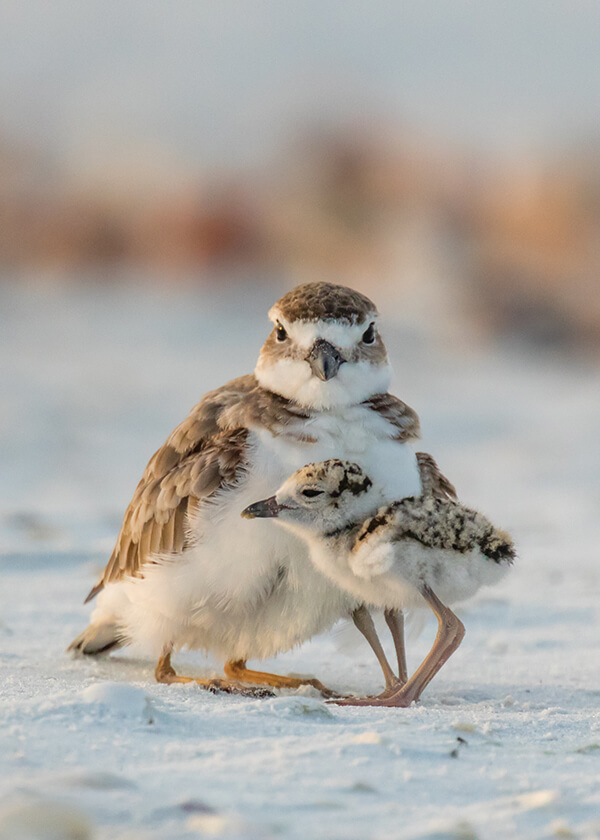
I remember the first time I ever spotted a Wilson’s plover. Walking near the dunes bordering the Atlantic Ocean, I caught movement sprinting across the sand. The plover, stretching less than eight inches and weighing two ounces, seemed both wary of me but intent on feeding. Its tannish back and white belly blended in with the surrounding sand and shells, but its large black bill stood out—a clear indicator of this species.
Seeing a Wilson’s plover on a Florida beach is cause to celebrate. There are fewer than 9,000 left in the United States, and they are vulnerable to nesting disturbances on busy coastlines. Like their sea and shorebird neighbors, there’s a lot we can do to protect them as they nest, rest, and feed.
Which birds are on our beaches?
So many! Beaches are a great place to go birding, but Audubon specifically monitors certain beach-nesting species. In Northeast Florida we steward:
Wilson’s Plovers ~ Shorebirds that live on Florida beaches year-round, Wilson’s plovers look for food near the waterline. They love insects, crabs, and other invertebrates that live in these shallow waters. When their eggs hatch, their chicks are successfully up and walking within two hours.
Royal Terns ~ While some royal terns remain in Florida year-round, others migrate south in the winter to Mexico, Central America, and the Caribbean. They dive in the waves for fish, which they bring back to their one to two chicks on land.
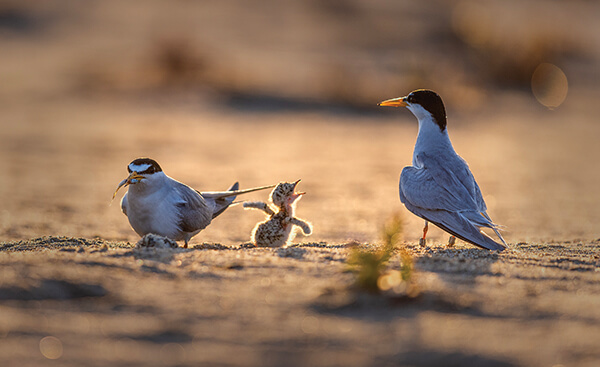
Least Terns ~ A smaller relative of the royal tern, least terns fly north to Florida only in the spring and summer before retreating as far as South America for the colder months. They eat small fish, matching their much smaller size. While their babies can walk when they hatch, they stay in their sand nest until they are larger.
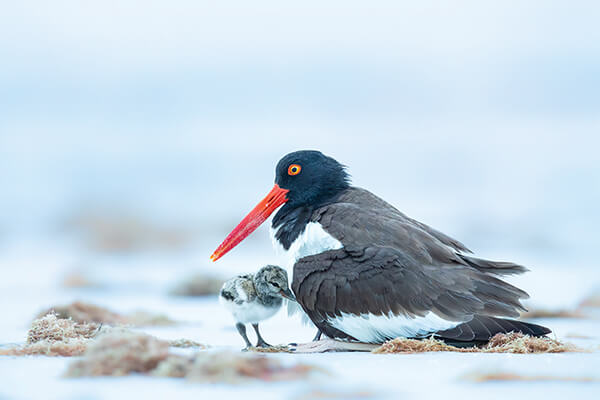
American Oystercatchers ~ These striking birds are year-round Florida residents (though some also migrate to Central America and the Caribbean). They mostly eat clams, oysters, and mussels using large, bright orange bills. Unlike the above birds, oystercatchers like a little bit of vegetation in their nesting sites, including sea oats or beach grass. They lay two to four eggs at a time, and their chicks can leave the nest the day after they hatch.